Why Traditional Portable Toilets Fail Women (And What’s Replacing Them)
Women still queue. Ratios are met. Nothing works. This is why traditional portable toilets fail women, and what events are doing instead.

Portable toilets weren’t designed for festivals, concerts or female-heavy crowds: they were borrowed and scaled without question. As demand peaks and queues grow, that legacy is finally being challenged. Here’s what’s changing.
The portable toilet industry is growing fast, and yet, much of that growth is coming from exactly the environments where performance is hardest to get right.
The global portable toilet rental market was valued at over USD 20 billion in 2023 and is expected to continue expanding through to 2030, driven largely by events, temporary public gatherings, and urban activity.
More events. Bigger crowds. Higher expectations.
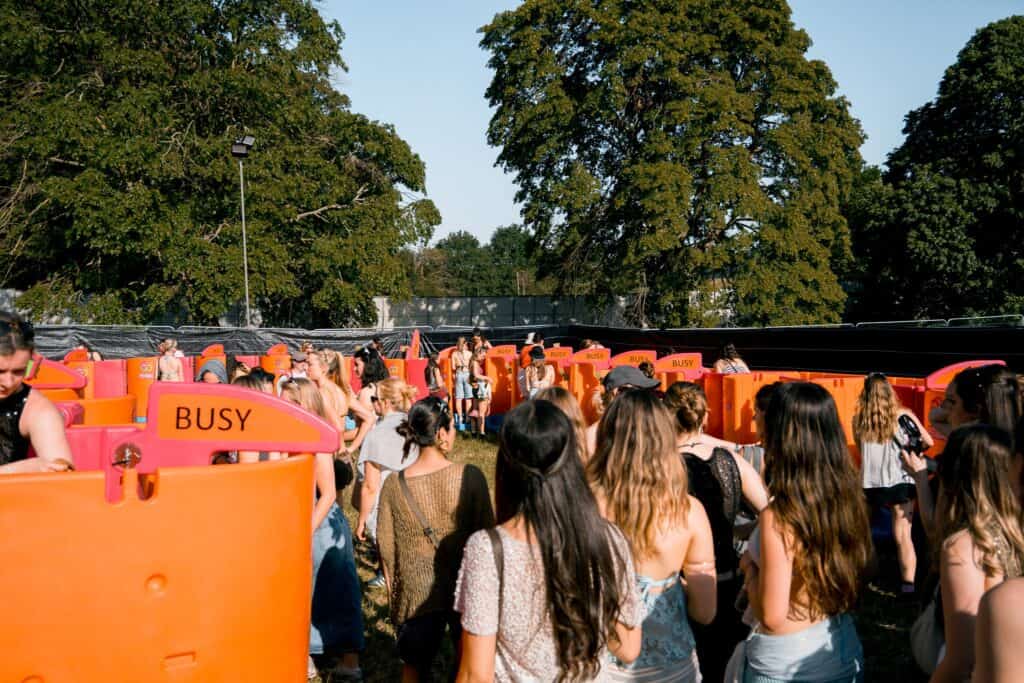
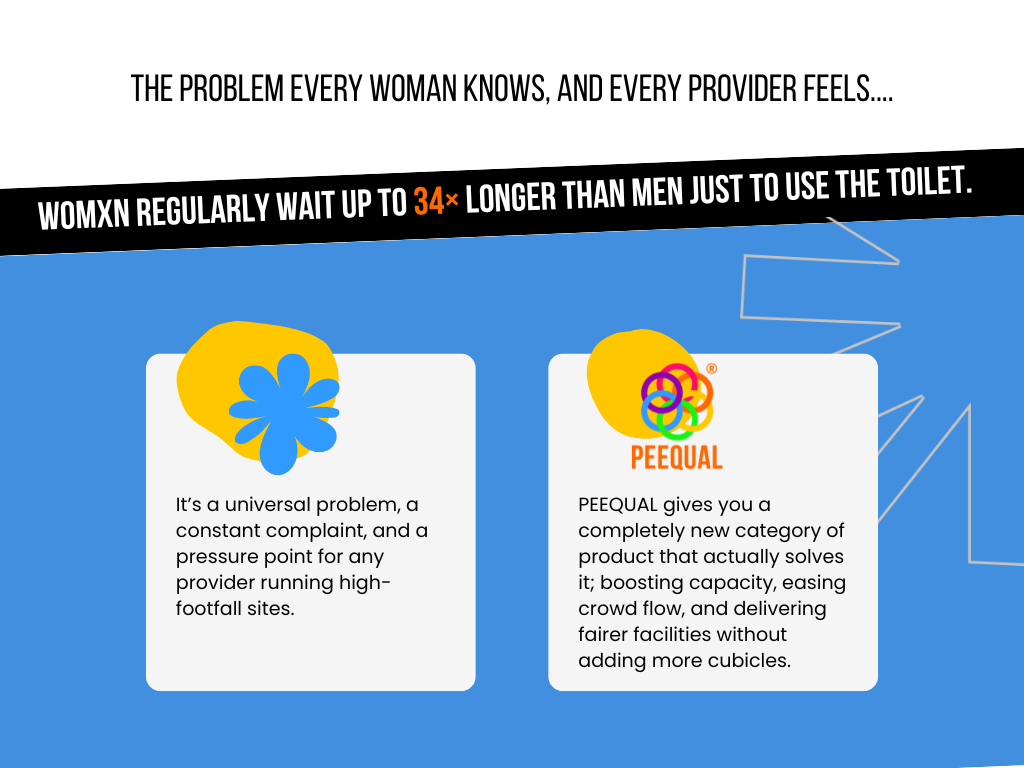
Despite better planning tools, clearer guidance and decades of operations, one issue keeps showing up on site: women queue for toilets far longer than men, even when unit numbers meet recommended ratios.
This isn’t just common knowledge from the field: it’s well documented. Research into public toilet usage consistently shows that women take longer per visit than men, on average, due to clothing, anatomy, hygiene needs, menstruation, pregnancy and caring responsibilities. These differences are explored widely in urban planning and transport studies, including peer-reviewed research.
This is where the concept of “potty parity” comes from: the idea that equal access isn’t about equal numbers of toilets, but equal waiting times.
Sanitation bodies have repeatedly highlighted that simple 1:1 ratios don’t translate into fair outcomes when usage patterns differ.
For portable toilet providers, this creates a familiar tension…
On paper, the brief is met.
On site, queues still form, complaints still land, and toilets remain one of the most visible pressure points of any event.
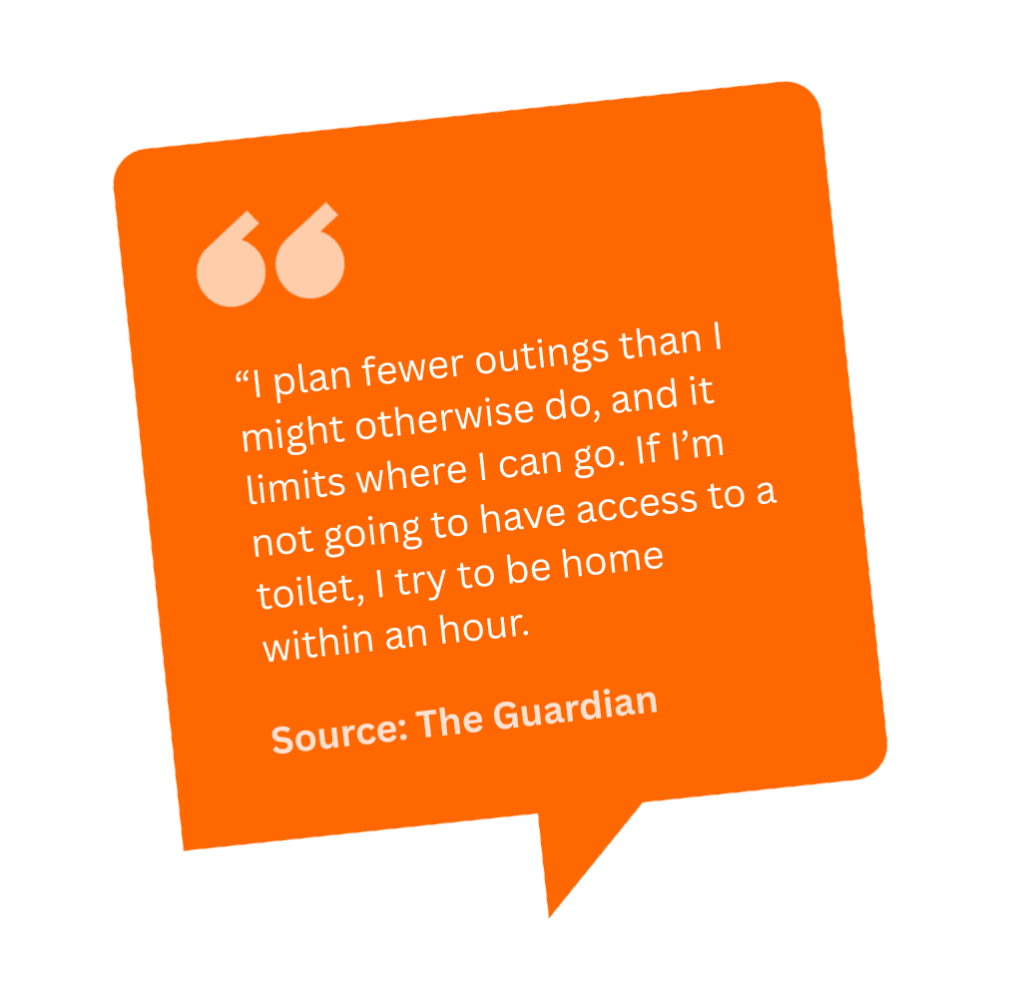
In this article, we’re tackling a design legacy that no longer matches modern event reality, and exploring why more providers are rethinking women’s provision, not as a “nice to have”, but as a practical challenge worth solving properly.
We’ll discuss:
- What was the portable toilet actually designed for?
- How portable toilets behave at real events
- Why “more portable toilets” doesn’t fix the problem
- What’s changing in women’s toilet provision
- What organisers should look for beyond unit hire
- Our final words
Let’s start from the beginning.
What was the portable toilet actually designed for?
Everyone in this industry knows what a portable toilet is. What matters more is the job it was originally built to do.
The modern portable toilet didn’t come from festivals, concerts or city events. It came from construction sites and industrial projects, where regulators like the HSE in the UK and OSHA in the US required basic welfare facilities in places with no permanent plumbing.
The brief was clear and commercially sensible:
- Build something tough
- Keep costs down
- Make it easy to move and service
- Optimise for short, predictable use
Crucially, at the time, it was designed for a mostly male workforce.
When large-scale events started to grow, that same unit was adopted almost by default.
Portable toilets were already mass-produced, already accepted by regulators, and already sitting in supplier fleets. Scaling provision meant delivering more of the same, not rethinking the model.
That’s why the system scaled in numbers, not in suitability.
Why traditional portable toilet design struggles with women at events
From an operations standpoint, most portable toilet assumptions still reflect male usage patterns:
- Faster visits (thanks to larger bladders!)
- Less clothing to manage
- Shorter dwell times
- No periods
- Less childcare responsibilities
Women, AFAB and trans people don’t fit neatly into that model.
Research into public toilet use has long shown that women take longer per visit, need greater privacy, and are more affected when hygiene falters. At events, those differences show up fast, especially during peak demand windows.
Because most provisioning guidelines focus on units per head, rather than users per hour, these realities rarely translate into hire numbers, layouts or servicing plans.
For providers, the result is a familiar: toilets that technically meet the brief, but still underperform on site, particularly at festivals, concerts and city-centre events with high female attendance.
That gap isn’t caused by poor servicing or bad planning. It’s a legacy issue, baked into a design that was never meant to carry the load it’s now expected to handle.
How portable toilets behave at real events
On paper, the portable toilet model is solid. Waste goes into a sealed tank, chemicals do their job, and servicing happens on schedule. In controlled conditions, it’s efficient and predictable.
But, as we all know, events aren’t controlled conditions.
Footfall surges. Demand spikes in short bursts. Alcohol, weather and crowd behaviour all change how and when toilets are used. The result is a system that looks fine in a spreadsheet, but gets stretched quickly on-site.
Toilet demand at events isn’t evenly spread. It peaks before headline acts, during changeovers, and at closing time. Because women generally take longer per visit, queues form faster and clear more slowly, even when overall unit numbers meet guidance.
That creates a few knock-on effects:
- Lower throughput per unit, especially during peak windows
- Faster drop-off in cleanliness, which slows use further
- Servicing plans slipping, as tanks and consumables hit limits sooner than expected
From the outside, it can look like something’s gone wrong. In reality, the system is doing exactly what it was designed to do: just not what the event is asking of it.
This is why the real question for providers isn’t only how many units are on site, but how the setup performs under peak load, and whether the model is fit for the crowd it’s serving.
Why “more portable toilets” doesn’t fix the problem
When queues build, the default response is to add more portable toilets. It’s simple, familiar, and easy to write into a contract.
The issue is that more units don’t automatically mean more capacity.
Most toilet planning still relies on static ratios: people per unit, over time. That only works if usage is evenly spread, dwell times are similar, and servicing stays predictable.
At events, none of that holds true.
What often happens instead is overprovision in the wrong place. More units increase delivery, footprint and servicing load, while the core issue, slow turnover on the women’s side during peak windows, remains.
Why throughput matters
Throughput is driven by speed of use, layout and how well a setup holds up under pressure.
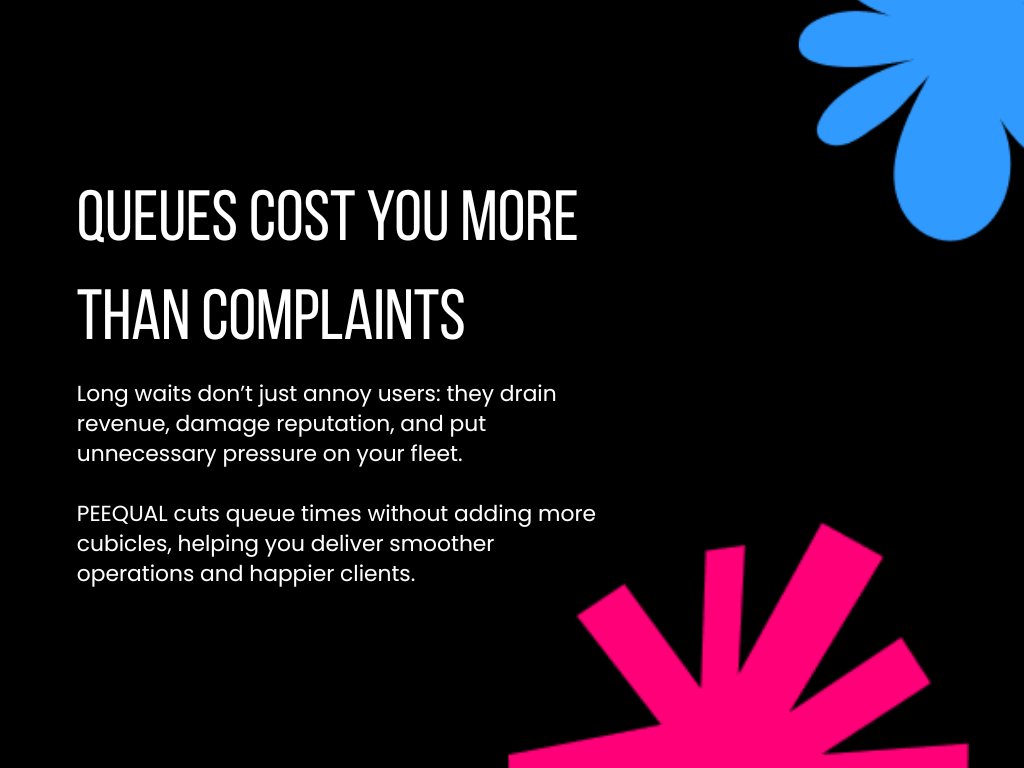
Traditional portable toilets have a natural throughput ceiling for women. Once that’s reached, adding more of the same delivers limited returns. That’s why the conversation is starting to shift from how many toilets are on site to how well the system performs when it matters most, a change that benefits organisers and providers alike.
What’s changing in women’s toilet provision
As the limits of the standard portable toilet become clearer, more organisers and providers are starting to mix their setups, rather than relying on cubicles alone.
This isn’t about replacing portable toilets altogether. It’s about ensuring systems cope better with peak demand, especially where female attendance is high.
Alternatives designed around faster flow
One of the biggest shifts has been the wider use of women’s urinal units and squat-to-pee designs, built specifically for female anatomy. The appeal is straightforward:
- Shorter visit times
- Simpler layouts
- Less reliance on full cubicles for every use
These units are no longer niche. They’re increasingly specified at large events where queues are a known risk, and the footprint is tight.
Because these setups reduce time spent per user and limit contact points, they tend to hold up better during pressure periods. Faster turnover improves flow, and simpler interiors are easier to keep clean.
For providers, that can mean:
- More stable servicing schedules
- Less congestion at peak times
- Better performance without adding extra units
Why festivals are leading the shift
Festivals feel inefficiencies first. Demand is intense, uneven, and highly concentrated. Mixing higher-throughput options into women’s provision helps reduce queues and operational stress without expanding the site footprint.
The signal from organisers is clear: the focus is moving away from “how many toilets” and towards how well the system works when it matters most.
What organisers should look for beyond unit hire
At this point, most organisers understand that toilet problems aren’t caused by a lack of effort. They’re caused by relying on a model that struggles under peak demand, especially on the women’s side.
The question is no longer “how many toilets do we need?”
It’s “will this setup actually perform when the site is under pressure?”
The strongest event sanitation plans are starting to focus on throughput, flow and resilience.
That means looking for systems that:
- Increase capacity without adding rows of cubicles
- Reduce bottlenecks during peak-time surges
- Hold up better as hygiene declines later in the day
- Integrate into existing layouts, fleets and servicing routines
This is where higher-throughput, women-first systems are earning their place alongside traditional portable toilets.
Options, like those designed by PEEQUAL, specifically relieve pressure on women’s provision at the moments when queues normally spiral. Rather than replacing cubicles, they work alongside existing toilet blocks, boosting overall site capacity by increasing speed of use and smoothing flow during demand spikes.
Because the units are modular, compact and waterless, they fit into tight spaces, install quickly, and don’t require specialist servicing or changes to existing logistics. For organisers, that means fewer reactive fixes on site. For providers, it means better performance without increasing delivery, storage or servicing load.
Most importantly, these systems are built around real-world event behaviour, not ideal scenarios. They’re designed by people who’ve worked inside event operations, dealt with queues in real time, and understand where traditional setups start to strain.
The shift happening now isn’t radical; it’s practical. Organisers are still hiring portable toilets. They’re just starting to expect more from the system as a whole, especially when female attendance is high, and peak demand is unavoidable.
The events that get this right aren’t the ones with the most toilets on site.
They’re the ones whose toilet strategy still works when everything hits at once.
In the end?
Portable toilets still have an important role to play at events, but the way they’re used hasn’t always kept pace with how audiences have changed. As crowds grow and expectations rise, especially around women’s provision, it’s becoming clear that unit numbers alone don’t tell the full story.
For providers, the opportunity lies in understanding where the model reaches its limits and how performance can be improved through smarter planning, better balance, and systems that reflect real usage on site.
Interested to see what that could look like? Get in touch today to discuss modernising your fleet.
If you’re interested in how some events are already tackling these challenges in practice, you can explore how PEEQUAL fits into modern toilet provision, or you can contact us directly to discuss upgrading your fleet.